Air Cooled Condensers
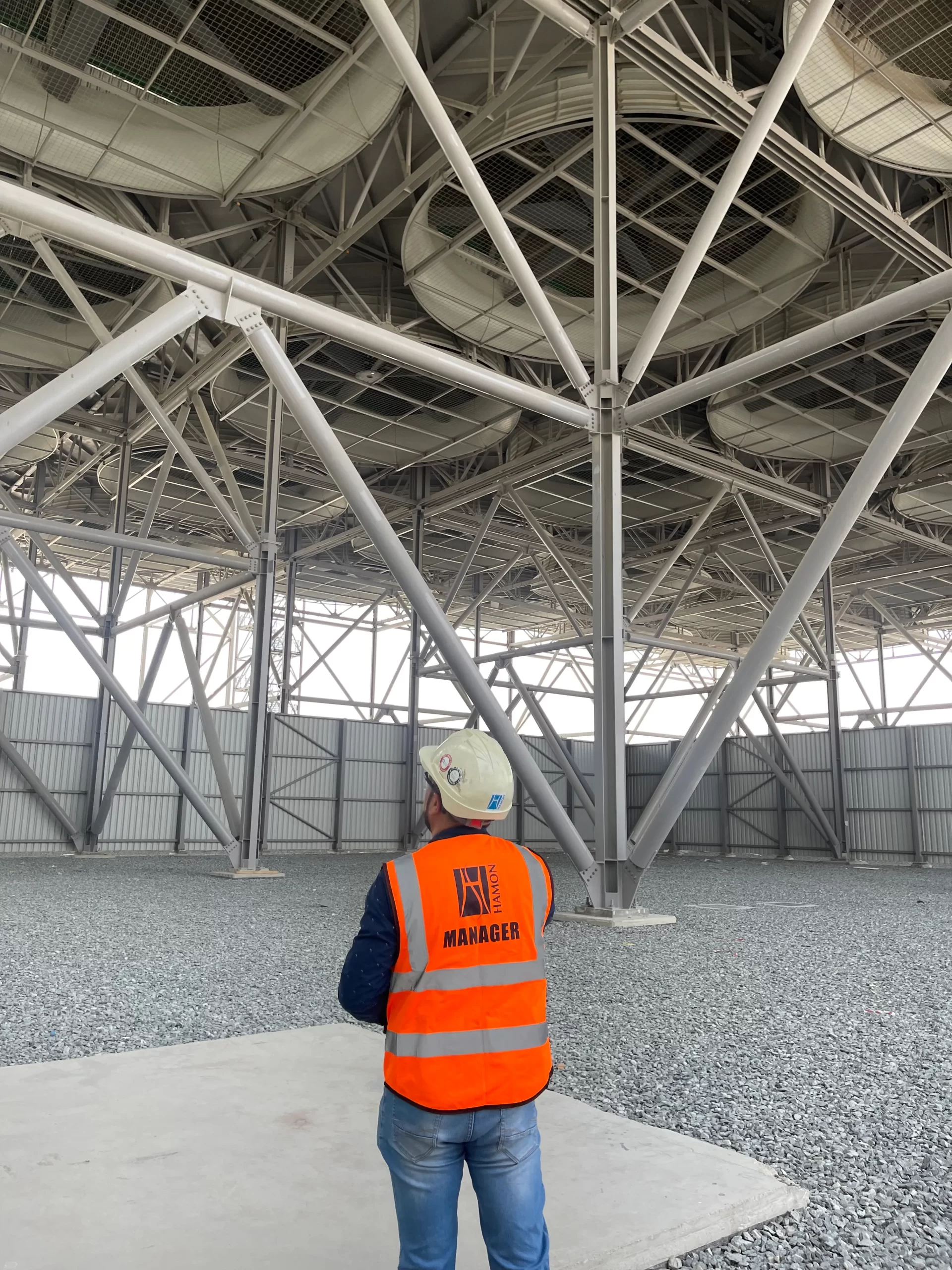
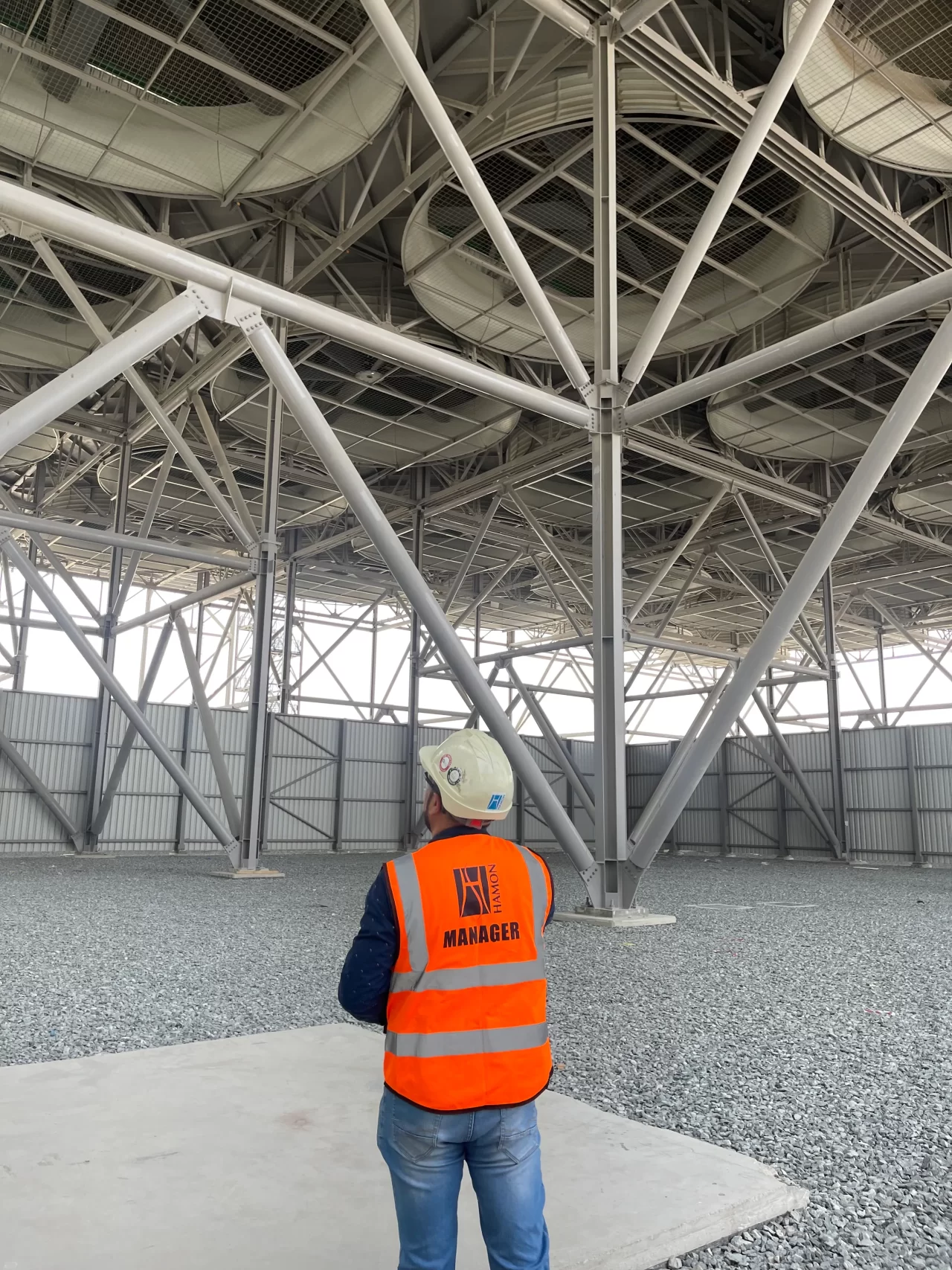
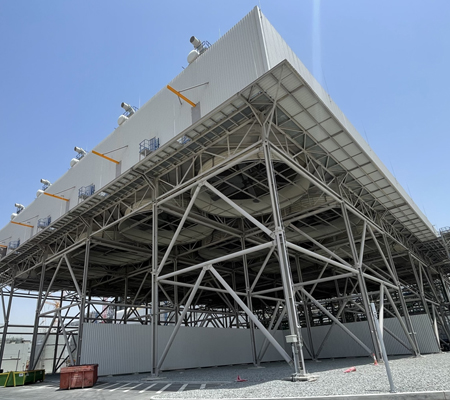
The John Cockerill Hamon ACC (Air Cooled Condenser) is designed with optimized key sections and equipment to guarantee a maximized efficiency. The steam flows from the turbine into a steam duct and several manifolds to reach the fin tube bundles. The John Cockerill Hamon ACC is designed in streets sitting on a steel leg system (under structure) raised to allow proper air intake into the forced draft modules of A-shape steel frames supporting the fin tube bundles.
Once condensed the steam is collected by gravity into a condensate tank located underneath or in the close vicinity of the ACC. The efficiency of the steam condensation process is guaranteed using appropriate and reliable vacuum units. John Cockerill Hamon guarantees the complete system and undertakes integral studies related to the ducts and manifolds, the steel leg system and the pipe work and other special studies as appropriate.
Dry Cooling — Zero Water, Growing Demand
- Air-cooled condensers reject heat by passing ambient air across finned coils — no evaporation, no water consumption, and none of the water treatment or Legionella management a wet system requires.
- This makes ACCs the preferred choice wherever water is scarce, expensive, or regulated — a consideration that’s only growing more important across the GCC as industrial water allocations tighten.
Steam Cycle Condensing, Without the Water
- In power generation — whether combined-cycle gas plants, waste-to-energy, or industrial cogeneration — the condenser at the back end of the steam turbine has to reject enormous quantities of latent heat as exhaust steam turns back to water, traditionally done with once-through cooling water or evaporative cooling towers.
- Air-cooled condensers replace that water-intensive step entirely, condensing turbine exhaust steam directly against ambient air. For plants in the GCC — where water allocation is a genuine constraint on project approval, not just an operating cost — this can be the difference between a permittable plant and one that isn’t.